
Navigating Weight Loss Medication Costs: Affordable Options for Patients

Weight loss can be a challenging journey, and many individuals turn to medications like GLP-1 receptor agonists to aid in their efforts. These medications, such as semaglutide (Ozempic, Wegovy) and liraglutide (Saxenda, Victoza), have been shown to be effective in helping individuals manage their weight. However, the high cost of these drugs can make them inaccessible for many patients. If you are looking for affordable options, here is what you need to know.

Understanding GLP-1 Receptor Agonists and Their Costs

GLP-1 receptor agonists work by mimicking the effects of the GLP-1 hormone, which helps regulate appetite, slow gastric emptying, and improve blood sugar control. While these medications have proven benefits, they come with significant costs:
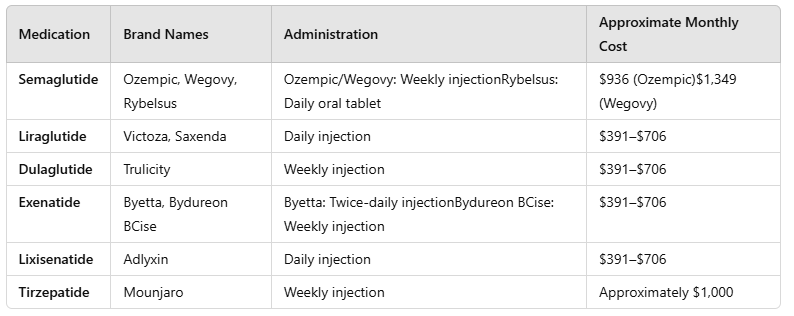
These prices can vary based on location, insurance coverage, and pharmacy choice. However, there are several ways to make these medications more affordable.

Strategies to Reduce Costs

  1. Check Insurance Coverage: Many insurance plans cover GLP-1 receptor agonists for type 2 diabetes, but coverage for weight loss may be limited. Checking with your provider can clarify eligibility and potential copay assistance.

  2. Use Manufacturer Savings Programs: Pharmaceutical companies often offer discount programs or copay assistance cards for eligible patients. For example:

    • Novo Nordisk offers savings programs for Ozempic and Wegovy.

    • Lilly provides discounts on Mounjaro for diabetes patients.

  3. Look for Generic Alternatives (If Available): Some medications, like liraglutide, may become available in generic form in the coming years, which could lower costs significantly.

  4. Consider Compounded Medications: Some compounding pharmacies may provide more affordable, customized GLP-1 formulations. Be sure to consult a doctor before using compounded versions.

  5. Compare Pharmacy Prices: Prescription discount websites like GoodRx and SingleCare can help compare prices across different pharmacies, often providing significant savings.

  6. Speak with a Doctor About Alternatives: If GLP-1 medications are not financially viable, other weight-loss options, such as older medications (e.g., phentermine) or lifestyle modifications with medical support, may be a good alternative.

Seeking Professional Guidance

Weight loss is a deeply personal and sometimes complex process. Medications can be a helpful tool, but affordability remains a barrier for many.

Denver Medicine can help you connect with a doctor who can assist you with weight loss in the Denver area. Whether through prescription assistance, alternative medications, or lifestyle changes, finding the right solution is essential to achieving your health goals.

Research Center

Amitriptyline for older patients: The Risks

Amitriptyline, a tricyclic antidepressant, is often considered a less-than-ideal choice for older patients due to its side effects and potential risks, which can significantly impact their health and quality of life. Here’s why:

1. Anticholinergic Effects

  • Amitriptyline has strong anticholinergic properties, which can cause dry mouth, constipation, urinary retention, blurred vision, and confusion. These effects can be especially problematic in older adults, who may already be at higher risk for cognitive decline or conditions like dementia.

2. Cognitive Impairment

  • Anticholinergic drugs like amitriptyline are associated with an increased risk of delirium and worsening cognitive function in older adults. Long-term use may even contribute to a higher risk of dementia.

3. Sedation and Fall Risk

  • Amitriptyline can cause drowsiness, dizziness, and postural hypotension, increasing the likelihood of falls and fractures. Older adults are particularly vulnerable to these complications, which can lead to significant morbidity and mortality.

4. Cardiac Side Effects

  • Tricyclic antidepressants like amitriptyline can prolong the QT interval, increasing the risk of arrhythmias. They can also exacerbate existing heart conditions, such as congestive heart failure or myocardial ischemia.

5. Drug Interactions

  • Older adults are often on multiple medications (polypharmacy), which increases the potential for drug interactions with amitriptyline. These interactions can lead to serious complications, including additive sedative or anticholinergic effects.

6. Better Alternatives

  • Safer and more tolerable alternatives, such as SSRIs (e.g., sertraline, escitalopram) or SNRIs (e.g., venlafaxine, duloxetine), are typically preferred for managing depression in older adults. For neuropathic pain or other off-label uses, medications like gabapentin or duloxetine might be better options.

Guidelines and Recommendations:

  • Beers Criteria: Amitriptyline is listed in the Beers Criteria as potentially inappropriate for use in older adults due to its high risk of side effects.
  • Risk vs. Benefit Assessment: If amitriptyline must be used, it should be prescribed at the lowest effective dose and closely monitored for adverse effects.

Understanding Ibandronate Medication: Indications, Monitoring, Side Effects

Ibandronate is a medication used to treat and prevent osteoporosis in postmenopausal women. It belongs to a class of drugs called bisphosphonates, which work by slowing down the breakdown of bone and increasing bone density. This article will provide an overview of the medication, its indications, monitoring requirements, and potential side effects. It aims to provide a neutral and informative discussion of Ibandronate to help patients and healthcare professionals better understand its use and potential risks.

Vaccination Options

Please note we carry most vaccines for adults in the clinic. If you need anything other than routine adult vaccines, or special vaccines, you must call (303) 602- 3520 to speak with county vaccination clinic. They provide almost all the vaccines. Many of them are free and some are affordably priced. 

Please check the link below to get information about county clinic.


Vaccines Without Insurance | Public Health Institute at Denver Health (phidenverhealth.org)


Heplisav-B vs Engerix-B: Differences in Sero-Positivity Impact

In the field of vaccination, there are various options available for protecting individuals against infectious diseases. Two commonly used vaccines for hepatitis B are Heplisav-B and Engerix. Both vaccines aim to stimulate the immune system to produce antibodies against the hepatitis B virus. However, there are differences in their composition and administration, which may impact their effectiveness in inducing sero-positivity. This article will explore the differences between Heplisav-B and Engerix in terms of their ability to generate sero-positivity, providing a neutral and descriptive analysis of their respective attributes.